


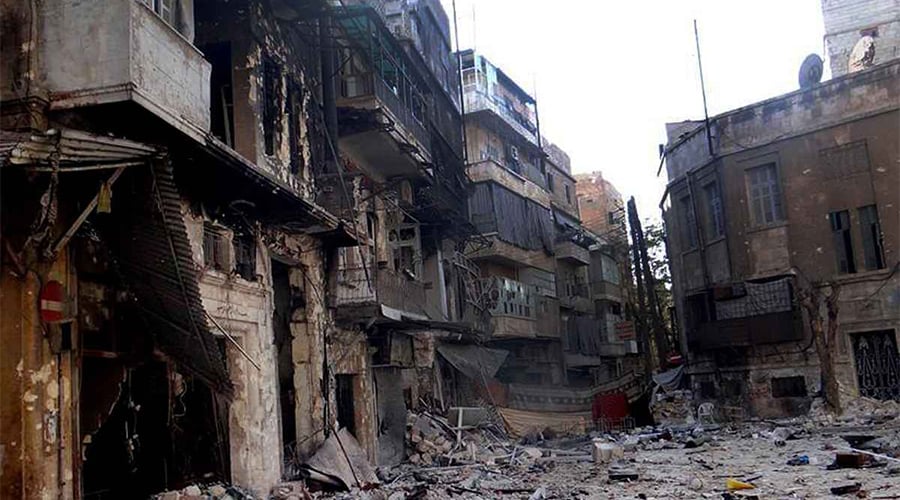
We, at SNHR, can confirm that numbers of undocumented civilian victims largely exceed what we have documented in our lists with names, places, and pictures. There are tens of cases that we weren’t able to access due to the siege imposed by Syrian regime forces, and due to the fact that the crime’s aftermaths are wiped out in many cases, which makes maintaining the internationally common standards and practices impossible to achieve in most of the cases.
We condemn the policy of banning human rights organizations, and hold the Syrian regime responsible for refusing to allow them to operate and document. Consequently, thousands of Syrian people are rendered missing, and their fates are unknown. Also, the international community, including all of its institutions and especially Security Council and United Nations, are partly to blame because they haven’t applied the necessary pressure in this particular regard. The Syrian case is one of the world’s rarest cases where all types of human rights, media, and even relief organizations are banned whether they were local, such as SNHR, or international human rights organizations.
A very explicit example that demonstrates what this report’s finding is what happened on Friday, March 9, 2012, where people were killed and women were raped in the neighborhoods of Esheira, Adawya, and al Refa’ie in Homs city. Initially, some reports surfaced about a siege imposed by the Syrian army and Shabiha and the killing of nearly just 14 residents. In reality, more than 225 were killed and others were missing. What happened on the ground hasn’t been revealed in detail until after months of investigations. The incident had come and gone, and didn’t have its due impact on the Arabic and international levels even though it was one of the most horrendous crimes against humanity, and even constitute war crimes, as it was one of the ugliest massacres in the Syrian revolution.
Date of Incident: March 9, 2012 to March 11, 2012
As we told by someone who survived death and had recently recovered from his severe wounds, where he is residing in Homs city at the moment, in addition to accounts and fact-collecting that lasted for long weeks, on Friday morning Eseira neighborhood was enclosed by Shabiha who came from the pro-regime neighboring neighborhoods, which is always the first stage. This was followed by a heavy shelling that lasted nearly 18 hours and left behind tens of dead bodies and so many more wounded. The shelling then expanded to reach al Refa’ie and al Adawya neighborhoods.
Residents, most of them are women and children, tried to flee. However, Syrian army forces’ shelling reached them and killed 22 women and 13 children as they were fleeing.
The second phase, following the shelling, is a raid. Backed by Syrian army and its tanks, vehicles, and weapons, hundreds of Shabiha entered on Sunday morning, March 11. Field-executions and house raids began in addition to arresting tens of the neighborhood residents and raping women, and then slaughtering tens of innocent residents with knives, before killing all those who are still, miraculously, alive by shooting them from close distances in the head or chest.
