


Civilians Need to be Protected as Coronavirus Cases Spread in Syria
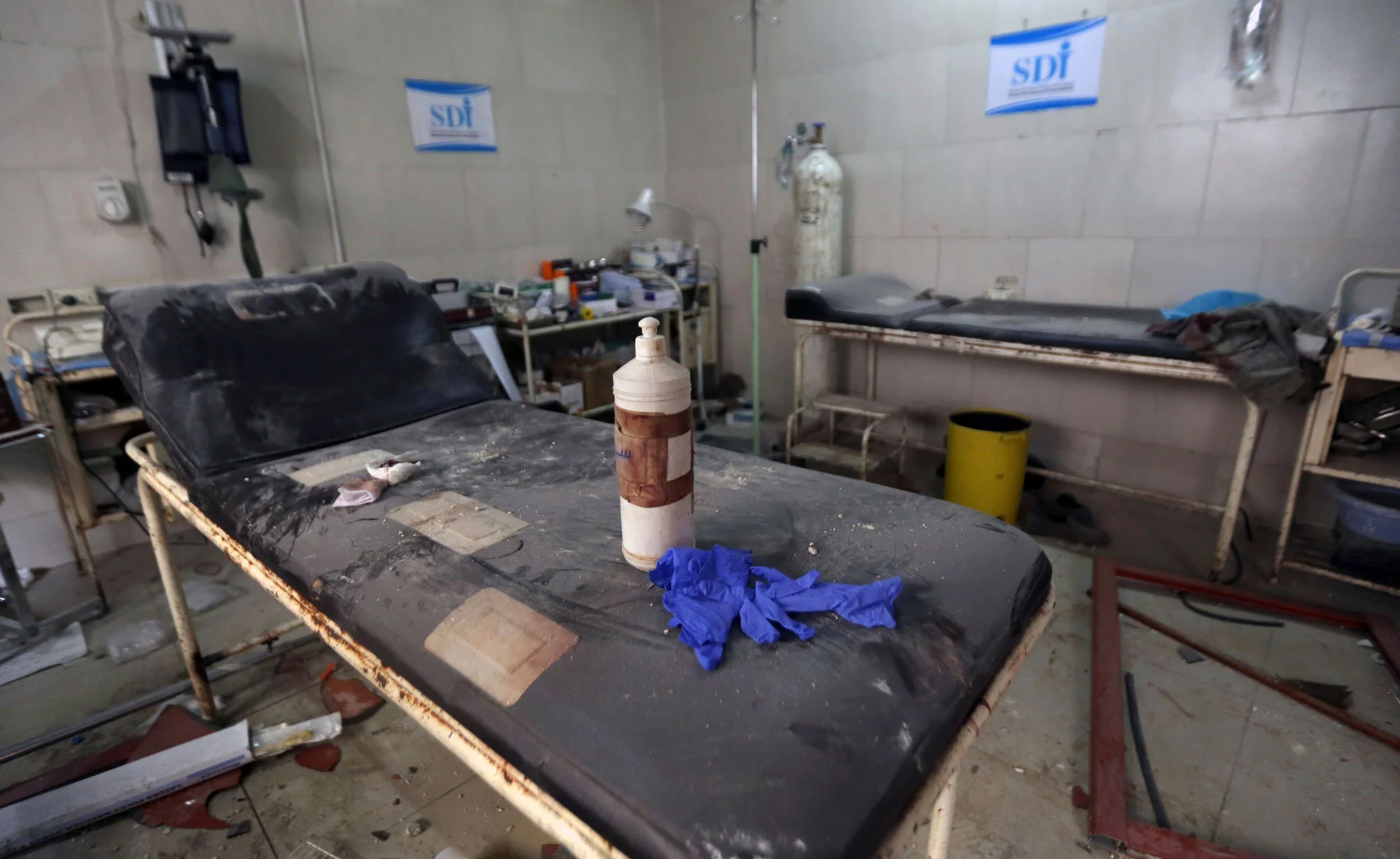
A surgical operation room is damaged after an airstrike hit a hospital in the town of Ariha, in Idlib province, Syria, January 30, 2020. © 2020 AP Photo/Ghaith Alsayed
Languages
Available In
Richard Weir
Researcher, Crisis and Conflict Division, Human Rights Watch
After almost a decade of conflict, and with new cases of Covid-19 recorded across the country, at least four million people, a quarter of whom are displaced in camps, await the next disaster in northwest Syria.
While much of the world was looking to their hospitals for safety from Covid-19, for the last year, residents and doctors in Idlib governorate, a region controlled largely by anti-government forces, have been forced to flee theirs. During a nearly year-long offensive beginning in April 2019, the Syrian-Russian military alliance repeatedly attacked critical civilian infrastructure across Idlib, including hospitals and healthcare centers, causing untold civilian harm and forcing nearly a million to flee in just a few months.
Many of the displaced are now living in camps in northern Idlib and along the Turkish border, where most barely have access to basic necessities, including health care, water, and food, making social distancing and basic hygiene almost impossible.
With a March ceasefire between Turkey and Russia largely holding, over a hundred thousand residents have returned in recent weeks to areas in Idlib that have not been re-taken by the Syrian government.
But their safety is uncertain.
Hospitals have been damaged in a quarter of all communities in northwest Syria, according to a United Nations report released last week. Many medical workers have fled and the ability to deliver life-saving assistance has been crippled. The region is woefully ill-prepared to respond to the Covid-19 pandemic, which may be just at its doorstep.
While there are currently no known cases in northwestern Syria, the first confirmed Covid-19 case was reported in northeastern Syria last week.
Any resumption of strikes targeting civilian infrastructure would pile cruelty on cruelty, further damaging the remnants of the healthcare system.
And despite years of attacks and multitudinous inquiries, there has been no accountability. Even the UN Secretary-General’s Board of Inquiry convened to investigate attacks on hospitals could not bring itself to recommend that Syria and Russia be held to account, let alone name Russia as jointly responsible.
If nothing else, this pandemic has laid bare the persistent failure of the international community to hold Syria and Russia to account – and the devastating human toll of continued impunity for possible war crimes.
The original article was published on the Human Rights Watch website
