


5307 citizen have been killed by the snipers of the Syrian regime and its militias
Languages
Available In
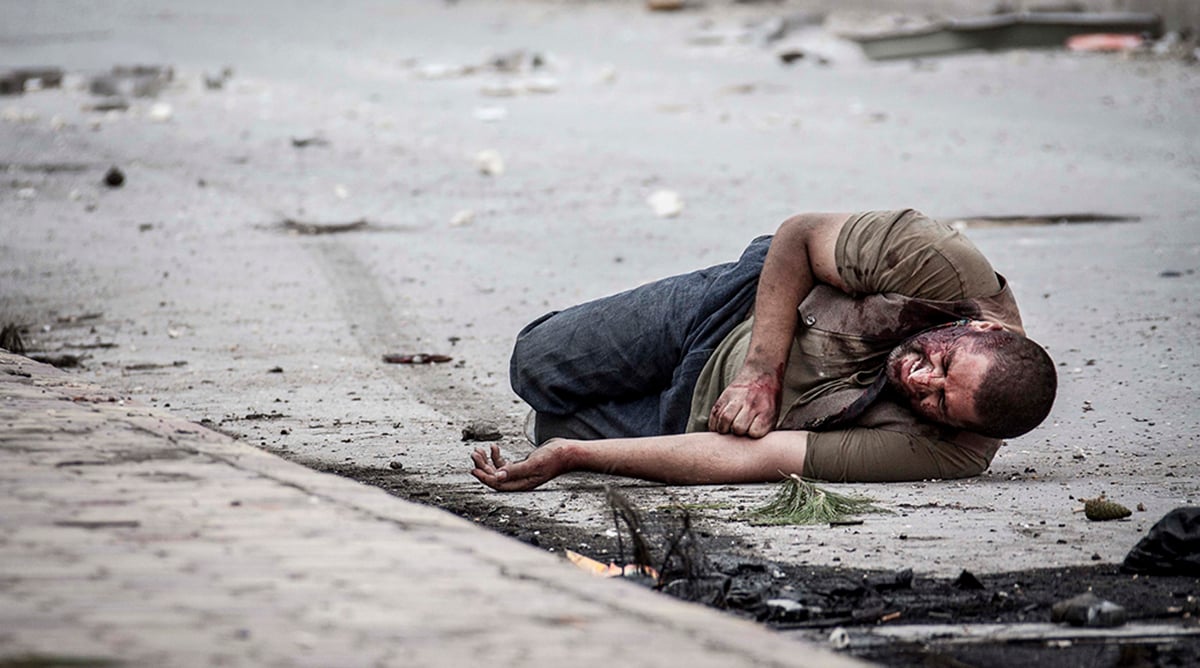
When a sniper decides to kill a victim, he observes him very closely through the scope which enables him to identify the target before killing him. Thus, sniping is very similar to execution as the sniper knows exactly whom he is going to kill with the only difference being that the sniper, usually, doesn’t know or care about the victim’s charges or distinguish between a child, elder, woman, or even handicapped.
Typically, snipers choose sites that overlook roads and cities so he can observe and obstruct the different aspects of day-to-day life and be able to kill the highest possible number of civilians and rebels inside cities. Furthermore, snipers chose usually religious, educational, or public buildings, such as mosques, schools, hospitals, administrative buildings and residential towers, for its distinguishable location.
The Syrian regime resorted to sniping as a method to oppress demonstrations and protests at the early stages of the Syrian revolution. Many security personnel were used at first as snipers before it was used on a wider scale. The phrase “watch out, there is a sniper” became very common in the streets of Syria. The Syrian regime uses sniping as a method to enforce curfews or close specific streets and location on Fridays.
The Syrian regime used only Syrian snipers until June 2012. However, with the Syrian revolution turning into an armed conflict and the growing clashes in the cities, the Syrian regime relied more heavily on “foreign” Shiite Iraqi, Iranian, and Lebanese snipers. For more details, please see SNHR’s report “Fighting Shiite Militias in Syria”.
In 2013, we recorded the use of new sniping weapons starting with 6 mm to 12,7 mm some of which were manufactured in Belgium or manufactured or tweaked in Iran. Some of the rebels published videos of such weapons after they managed to take over some of the Syrian regime military sites.
The following are some of the most known sites for snipers that were used to kill the highest number of civilians
7 April tower in Damascus – Az-Zabltany.
Bostan Al-Qaser, Al-Qasar Al-Baladi, and Al-Itha’a military checkpoints in Aleppo.
Al-Ghardiniya tower in Homs.
The National Hospital building in Daraa.
The Union building in Hama.
As-Siyasiya tower in Der Ezzor.
Through studying pictures and video footages of people who were injured by snipers, SNHR was able to note some “characteristics” of the Syrian regime snipers, type of victims they tend to target, or the injuries they intend to cause. For instance, some of them intend to injure women in sensitive areas; SNHR documented the killing of 641 by snipers which we mentioned in a report we published about wounded in Syria.
Fadel Abdulghani, founder and head of SNHR, says: “anyone who contributed in selling sniping weapons to the Syrian regime and its militias is an actual partner in the crime of murder, which is classified as a crime against humanity, especially that the allies of the Syrian regime are completely aware that these weapons are being used to perpetrate such crimes.”
//
