


Available in:
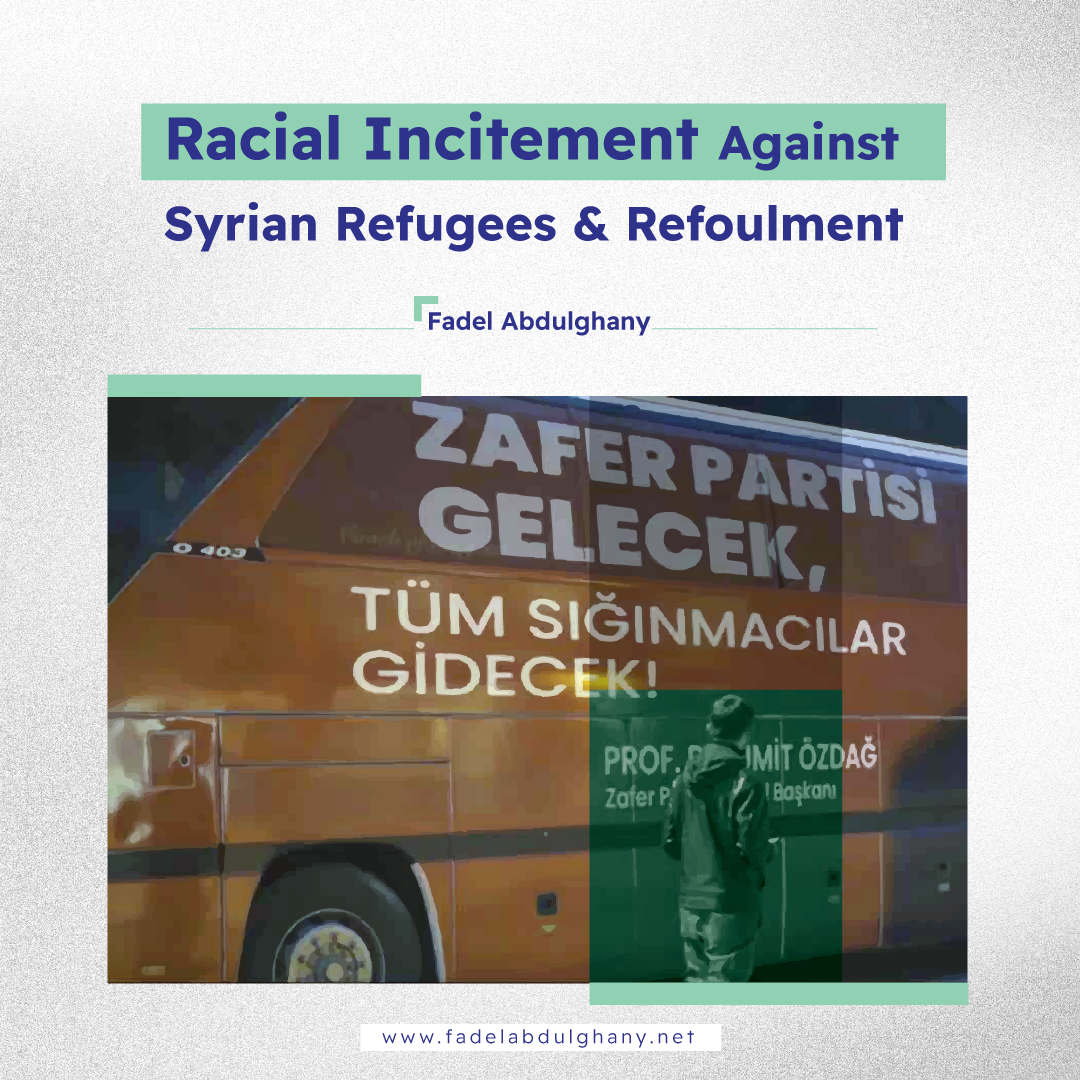
This paper by Fadel Abdulghany offers a timely and compelling examination of how racial incitement against Syrian refugees in host states, most notably Türkiye and Lebanon, operates as a policy accelerant for refoulement, including coerced ‘voluntary’ returns produced by deliberately harsh living conditions.
Grounded in international refugee and human rights law, the study clarifies that non-refoulement is a peremptory norm binding for all states and that hate-based advocacy targeting refugees exceeds permissible political expression where it constitutes incitement to discrimination, hostility, or violence. It thus connects the legal prohibition of refoulement with states’ positive obligations to curb xenophobic speech that predictably erodes refugees’ rights and safety.
The paper traces how xenophobic narratives, amplified by segments of political elites and media ecosystems, cast Syrians as economic, security, or cultural threats, catalyzing public hostility and legitimizing restrictive administrative measures (e.g., movement limits, protection withdrawals, and deportations). The Lebanese and Turkish cases are presented as salient illustrations of this dynamic: official rhetoric and media framings help normalize exceptionalism in refugee governance, while online mobilizations magnify prejudice and translate into on-the-ground abuses and removals, in defiance of international standards.
The analysis advances a clear policy agenda: states must enforce robust bans on incitement to racial and xenophobic hatred, hold officials accountable for discriminatory speech, and align domestic measures with non-refoulement obligations under the 1951 Refugee Convention, Article 20(2) of the International Covenant on Civil and Political Rights (ICCPR), and Article 4 of the International Convention on the Elimination of All Forms of Racial Discrimination (ICERD).
By invoking the principle of “Never Again”, the paper sets refugee protection within a broader moral vocabulary of equal dignity and historical responsibility, urging governments, civil society, and private platforms to counter xenophobic narratives that imperil lives and undercut the integrity of the international protection system.
