


Fadel Abdulghany
In post-conflict settings, the right to housing, land, and property (HLP) is internationally recognized as a cornerstone for achieving peace, consolidating transitional justice, and ensuring the safe and dignified return of refugees and internally displaced persons (IDPs).
Indeed, past conflicts show that the absence of clear and enforceable property rights disrupts reconciliation processes and undermines efforts toward sustainable recovery. Property ownership, on a foundational level, is a pillar of personal and economic security and is closely tied to communal identity, social cohesion, and civic trust in post-war societies.
In this critical context, the Syrian Network for Human Rights (SNHR) recently published an extensive report documenting systematic HLP rights violations committed by the Assad regime, specifically in Daraa governorate in southern Syria. According to the report, the Assad regime deliberately employed a combination of instruments that involved legal manipulation, intentional destruction, forced displacement, and the seizure of civilian property as a means of punishing those who participated in or expressed sympathy with the 2011 uprising.
These policies were carried out under a quasi-legal cover in the form of decrees and legislation such as Act No. 10 of 2018 and Legislative Decree No. 66 of 2012, which were nothing more than instruments to redraw Syria’s demographic and social map and punish communities that had slipped from the Assad regime’s control. These systematic violations have torn the fabric of Daraa’s communities, creating a real obstacle to any possibility of sustainable peace or genuine transitional justice. Today, these represent a major barrier to the return of hundreds of thousands of refugees and IDPs, who are now trapped in a perpetuated state of exile and forced displacement.
Background and context
Daraa governorate has played a foundational role in Syria’s modern history, having been the cradle of the Syrian uprising in March 2011, when anti-Assad protests broke out in the governorate. These demonstrations called for democratic reforms, respect for human rights, and an end to decades of authoritarian rule under the hereditary Assad rule.
On March 18, 2011, the first large-scale protest erupted in Daraa and was met with an immediate, bloody response by the Assad regime’s security forces, resulting in civilian deaths and injuries. In a twist of irony, this violent response did not end the uprising, but it further fueled it, with other governorates joining. Subsequently, the revolution became a nationwide movement demanding radical political change.
Yet, the Assad regime’s response was systematic and destructive. Assad regime forces launched large-scale campaigns of arbitrary arrests, enforced disappearances, and torture. SNHR has documented multiple patterns of grave violations against civilians in Daraa since 2011, including at least 22,443 extrajudicial killings, among them were 3,869 children and 2,140 women, and 8,706 cases of arrest and enforced disappearance, among them were 224 children and 194 women. In addition, 2,500 deaths under torture were recorded, including 19 children and four women, along with 158 attacks on vital facilities, including 25 schools and 35 medical facilities.
On this long list of grave human rights violations committed by the Assad regime, property confiscation emerged as part of a broader strategy adopted by the Assad regime. Using quasi-legal tools that feign legitimacy, the Assad promulgated a series of laws and decrees that effectively legalized the seizure of property from dissidents and displaced persons. These properties were later used in punitive redistribution that served the Assad regime’s political and social goals.
The Assad regime passed a package of laws and legislative measures designed specifically to give a legal veneer to mass dispossession under pretexts such as ‘reconstruction’ and ‘urban planning.’
The systematic nature of property violations
Since the outbreak of the popular uprising in 2011, the Assad regime has pursued a systematic policy of targeting civilian property across Syria, with a notable escalation in areas like Daraa governorate. This approach has been marked by deliberate destruction, widespread confiscation, and repeated seizure of homes, land, and other property – mostly belonging to regime opponents, forcibly disappeared persons, IDPs, refugees, or even those merely suspected of disloyalty.
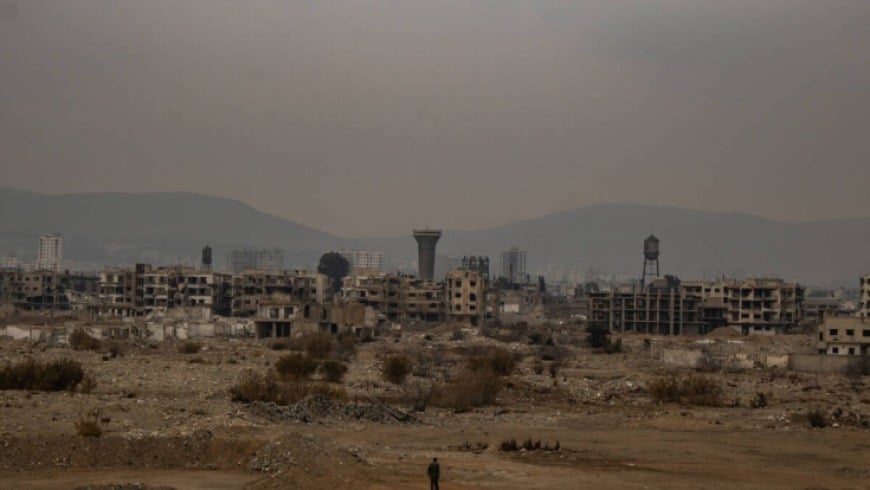
This method relies on a series of organized steps, typically beginning with deliberate aerial bombardment of residential neighborhoods using internationally prohibited and indiscriminate weapons, such as barrel bombs, guided missiles, and chemical weapons. As a result of this destruction, residents are forced into displacement, after which the Assad regime seizes the abandoned properties by either expropriating or pillaging these properties, directly eliminating any chance for return.
At the heart of these practices, the Assad regime passed a set of laws and legislative measures specifically designed to give a legal appearance to mass dispossession under the pretexts of “reconstruction” and “urban planning.” The most notable of these legal instruments include:
Legislative Decree No. 66 of 2012: While it was publicly promoted as an initiative for urban redevelopment in certain Damascus neighborhoods, it was used in effect to strip dissidents of their property and reassign high-value real estate to Assad loyalists and regime-affiliated investors.
Act No. 23 of 2015: Granted local administrative units the power to confiscate up to 40 percent of private sector land under vague justifications related to the ‘public interest,’ resulting in expropriation without fair compensation or effective legal recourse.
Act No. 10 of 2018: Widely condemned by human rights organizations, this act created nationwide urban redevelopment zones that particularly targeted displaced persons through impossible deadlines to prove ownership. These requirements were nearly impossible for many victims to meet on account of being displaced or imprisoned, facilitating large-scale confiscation.
Decree No. 140 of 2023: This was the most recent decree promulgated by the Assad regime in the context of legalizing seizure of property, which further tightened the Assad regime’s grip on private property under the guise of ‘reconstruction,’ further complicating any future efforts by displaced communities to reclaim their homes.
Humanitarian impact: why can’t refugees return?
The Assad regime’s systematic HLP rights violations extended far beyond physical destruction. They resulted in a complex humanitarian catastrophe that casts a long shadow over the future of millions of Syrians. The Assad regime used three main methods to obstruct return:
- Deliberate destruction and erasure of neighborhoods
Entire neighborhoods and towns in Daraa, such as Tareeq al-Sadd, al-Lajin, al-Nazihin ‘IDPs’ neighborhood, Kherbt Ghazala, and Nawa, were deliberately targeted for destruction. Satellite images and eyewitness accounts confirm that the destruction was not random. Residential infrastructure, commercial facilities, and basic services like schools and health centers were deliberately attacked, rendering these areas economically and physically uninhabitable and making return nearly impossible.
- Legal and administrative barriers
The Assad regime exploited the chaos of war to pass laws that served its goals of systematic property confiscation. Under these laws, authorities were given legal cover to seize land and homes belonging to displaced persons who lacked the ability to present ownership documents due to displacement, imprisonment, or the loss of official records.
- Occupation and redistribution of property
In many areas, Assad regime forces and allied militias -both local and Iranian – occupied confiscated properties or redistributed them to loyalists and influential figures. Public auctions were held for these properties in a clear effort to reshape the demographic composition in ways that prevent the return of original residents and complicate any future attempt to rebuild displaced communities.
Displaced persons suffer from worsening psychological crises caused by repeated displacement, loss of hope, and the absence of any sense of security about the future.
Impact on displaced communities
The repercussions of HLP rights violations have not been limited to individuals, but have had devastating humanitarian effects on the structure of displaced communities as a whole. These effects can be summarized in three main consequences:
- Loss of livelihoods and economic stability
Violations did not stop at the confiscation of homes, but also targeted agricultural lands and commercial establishments, which represent the main source of income for many families. The seizure of farmland in eastern rural Daraa, along with the destruction of commercial infrastructure, stripped thousands of families of their sources of income and economic independence. In the absence of compensation or viable economic alternatives, refugees and IDPs found themselves trapped in a vicious cycle of poverty and dependency, unable to build stable economic lives either inside Syria or in countries of asylum.
- Disintegration of society and social fabric
Forced displacement has torn apart the social fabric on a profound level. Families were scattered and community bonds severed due to geographic separation and the need to flee their original areas. The forcibly imposed demographic changes resulting from the seizure of property have disrupted traditional social structures, especially in Daraa, historically known for its tribal and communal cohesion. This fragmentation increases feelings of alienation and division, weakens the prospects of national reconciliation, and makes any project of transitional justice or community recovery far more complex.
- Ongoing insecurity and psychological trauma
Displaced persons suffer from worsening psychological crises caused by repeated displacement, loss of hope, and a lack of secure future prospects. The inability to return, recover property, or rebuild life keeps thousands of families in a state of chronic existential anxiety and prolonged trauma that threatens the long-term mental and social health of both individuals and communities.
Despite the severity of the violations that have affected HLP rights in Syria – particularly in Daraa governorate – the international response has remained modest and fragmented, falling short of the challenge posed by these systematic policies.
Legal analysis
Under international humanitarian law and international human rights law, the protection of HLP rights is a fundamental component of civilian protection during conflicts and is essential for accelerating recovery and reconstruction efforts in post-conflict phases. Numerous international agreements and treaties affirm the illegality of arbitrary seizure or destruction of private property, and condemn forced displacement as a grave human rights violation.
In the Syrian case, the practices pursued by the Assad regime, including systematic destruction, confiscation, and redistribution of property, particularly in Daraa governorate, constitute a blatant violation of these international principles. SNHR’s rigorous documentation provides detailed and comprehensive evidence showing that these violations were not merely collateral outcomes of war, but a deliberate, large-scale policy aimed at emptying communities of their populations, in stark breach of the fundamental norms of international humanitarian law.
Targeting residential neighborhoods, agricultural lands, and vital civilian infrastructure and destroying them cannot be justified under any military pretext. These acts constitute unlawful punitive measures designed to forcibly displace populations, punish opposition, and reshape the country’s demographic structure. These actions meet the legal definition of war crimes under Article 8(2)(a)(iv) of the Rome Statute, as they are “widespread,” “unlawful,” and “carried out arbitrarily.”
In addition, the issuance of a series of laws by the Assad regime, as previously mentioned, demonstrates a systematic intent to use legislation as a tool to legalize confiscation and displacement. These laws directly contradict the Universal Declaration of Human Rights and violate the core principles outlined in the Pinheiro Principles on housing and property restitution in the context of conflict and return.
Furthermore, forced displacement resulting from property confiscation and destruction falls under the definition of crimes against humanity as outlined in Article 7 of the Rome Statute, particularly when carried out systematically against groups viewed as political opponents of the ruling regime. Field data clearly indicate that most of those who had their property confiscated or lost their assets belonged to communities targeted due to their opposition to the Assad regime or for their perceived ‘disloyalty.’
International responses and responsibilities
Despite the severity of HLP rights violations affecting in Syria, particularly in Daraa governorate, the international response has remained underwhelming and fragmented. That is to say that the international response has failed to rise to the challenge posed by these systematic policies. Although numerous UN agencies, international human rights organizations, and Western governments have condemned forced displacement and arbitrary confiscation policies, these condemnations have not translated into effective political or legal action to hold perpetrators accountable.
The United Nations Human Rights Council has issued several resolutions condemning mass displacement and property destruction. Meanwhile, the Independent International Commission of Inquiry on the Syrian Arab Republic (COI) has repeatedly highlighted the laws used by the Assad regime to entrench displacement policies. However, despite the importance of these statements in terms of documentation, they have had no tangible impact in the absence of effective international enforcement mechanisms or real tools of pressure.
Documentation efforts and the pursuit of transitional justice remain paralyzed by geopolitical deadlock, especially due to the use of veto power by the Assad regime’s allies in the UN Security Council, which has blocked the referral of the Syrian situation to the International Criminal Court (ICC). As a result, thousands of victims have been deprived of their right to legal remedy, while violations have continued without accountability.
The conflict in Syria was not merely a conventional war but a multidimensional struggle targeting memory, identity, and geography alike. In Daraa, as in other Syrian cities, state apparatuses, from law to military force, were transformed into instruments of control and collective punishment.
The property rights file: an urgent priority for the new Syrian government
In the post-Assad phase, the upcoming Syrian government faces a major challenge: addressing the HLP rights issue, both in Daraa governorate and other affected regions. This issue is a fundamental entry point for any transitional justice initiative and for rebuilding trust between the state and its citizens.
This process should begin by repealing all laws and decrees that legalized the seizure of citizens’ property, foremost among them: Act No. 10 of 2018, Legislative Decree No. 66 of 2012, Act No. 23 of 2015, Decree No. 140 of 2023, and other quasi-legal tools that constituted the legislative framework for confiscation and displacement policies.
This framework must be replaced by a new legal system that guarantees the restoration of rights or compensation through effective judicial mechanisms that are transparent, independent, and inclusive of IDPs and refugees abroad who lost their property under the former Assad regime.
The government’s plan should also include the establishment of an independent local body tasked with reviewing confiscation files, investigating them, and identifying those responsible in preparation for redress and accountability. This body could collaborate with specialized international organizations or draw on the experiences of countries that have undergone similar post-war processes, in order to develop appropriate mechanisms for resolving property disputes in the Syrian context, taking into account its legal and demographic complexities.
Finally, the government must demonstrate a national commitment that goes beyond legal reform to actively work toward restoring the fragmented social fabric and ensuring community cohesion. This can be achieved through local initiatives for community justice, strengthening trust between the state and citizens, and creating the political and administrative conditions necessary for the safe and dignified return of those forcibly displaced to their towns and cities.
Conclusion
The conflict in Syria was not merely a conventional war but a multidimensional struggle targeting memory, identity, and geography alike. In Daraa, as in other Syrian cities, state apparatuses, from law to military force, were transformed into instruments of control and collective punishment. HLP were transformed into means to uproot and perpetuate the displacement of those who dared to dream of change.
As such, these realities represent a clear call to the international community and any future Syrian government to recognize that the right of return is incomplete without the restoration of property rights. Justice is not possible without genuine accountability and restitution of rights. Until then, the return of Daraa’s refugees and IDPs will remain a deferred dream, mired in complications – in symmetric opposition to the safe and dignified return they deserve.
