


Available in:
Fadel Abdulghany
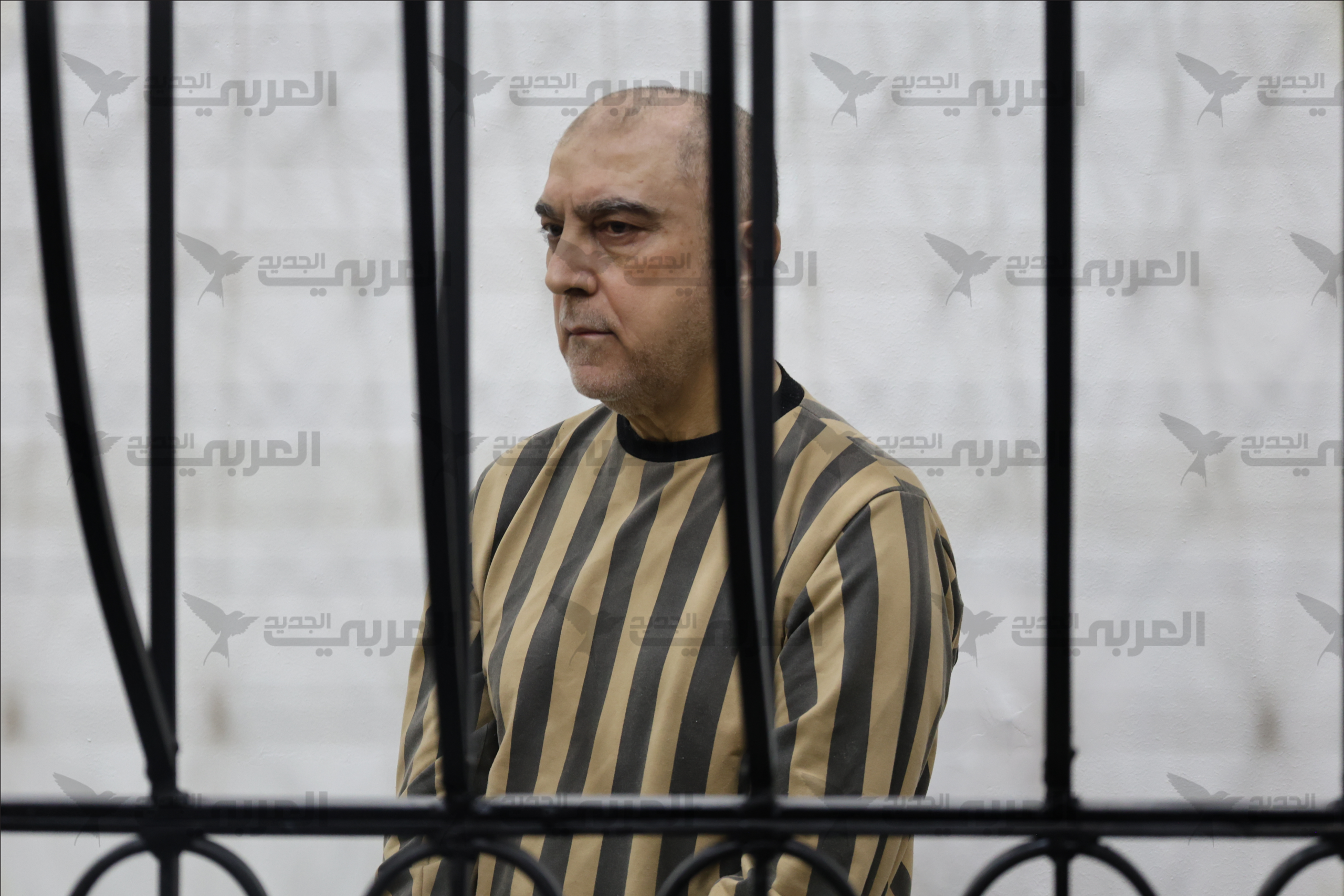
On 26 April 2026, the Fourth Criminal Court in Damascus began the proceedings for the trial of the former head of the Political Security branch in Daraa, Atef Najib, on charges relating to the violent suppression of the protests in early 2011. This session constituted the first appearance of a prominent figure from the former regime before a national criminal court, under the Syrian transitional authorities, on a charge of committing mass violations. Najib appeared before the court after his arrest in Latakia this past 31 January, following his return from Lebanon. The charge was directed in absentia against eight other defendants, among them Bashar al-Assad and his brother Maher. Najib denied the charges directed against him, and attributed the shooting of the protesters to other security agencies. The most difficult question remains whether the judicial record resulting from it will withstand legal scrutiny.
The case rests on a mixed legal framework; the indictment is grounded in the General Penal Code of 1949, the Anti-Torture Law No. 16 of 2022, the Counter-Terrorism Law, the Transitional Constitutional Declaration issued on 13 March 2025, and provisions contained in other instruments. International law is drawn upon as a supplementary and interpretive framework, by reference to the Geneva Conventions, the Rome Statute, and customary international humanitarian law. The court and the public prosecution have described the conduct attributed to the defendants as part of a widespread or systematic attack against the civilian population, and have classified some of the acts as war crimes. This mixture raises a structural problem; the Syrian Penal Code contains no definitions of crimes against humanity, war crimes, genocide, enforced disappearance, or command responsibility. The Anti-Torture Law, moreover, defines torture in terms narrower than those set out in Article 1 of the Convention against Torture. No specialized transitional criminal legislation has yet been enacted. Therefore, the court must derive the applicable law through interpretation, and the legal force of any judgment will depend on the quality of this interpretation. This article begins from the constitutional framework, since Article 12 of the Transitional Constitutional Declaration provides for Syria’s compliance with the international instruments it has ratified in the fields of human rights and international humanitarian law. Syria acceded to the International Covenant on Civil and Political Rights in April 1969, to the four Geneva Conventions in November 1953, to the First Additional Protocol in November 1983, and to the Convention against Torture in August 2004. However, Syria has not ratified the Rome Statute. It has not yet been settled judicially whether Article 12 operates as a self-executing mechanism that allows the court to apply the definitions of crimes contained in the treaties directly, or whether it requires implementing legislation. Comparative practice varies between monist systems, such as the Dutch system, which permits the direct application of ratified conventions, and dualist systems, which require the issuance of implementing legislation. The judgment in the Najib case may produce the first authoritative interpretation of Article 12 in this respect, and therefore the court will need to address the question explicitly rather than assume that it is settled.
The Problem of the Non-Retroactivity of Laws
Article 49 of the Constitutional Declaration raises a second difficulty, since it excludes crimes against humanity, war crimes, and genocide attributed to the former regime from the protection of the non-retroactivity of rulings, while retaining this protection for other defendants. The selective design of this article overlaps with Articles 15 and 26 of the International Covenant on Civil and Political Rights. Article 15 prohibits the retroactive application of penal laws, except for conduct that already constituted a crime under the general principles of law recognized by the international community. Article 26 requires equality before the law and equal protection without discrimination. The non-retroactivity exception tied to political affiliation raises questions about the soundness of both provisions. The safer approach lies in relying on customary international law, which criminalized the conduct in question before it occurred, and applies to any defendant regardless of his affiliation. The 2019 Draft Articles of the International Law Commission on the Prevention and Punishment of Crimes against Humanity, and the settled jurisprudence of the International Criminal Tribunal for the former Yugoslavia, confirm that crimes against humanity and war crimes are among the settled categories of customary law. Article 49 can constitute a complementary national mechanism, but it should not be the sole or principal basis for overcoming the plea of the non-retroactivity of the law. The same logic applies to the statute of limitations, since Article 18 of the Constitutional Declaration provides for the abolition of the statute of limitations in torture cases. As for crimes against humanity and war crimes, the indictment relies on the 1968 Convention on the Non-Applicability of Statutory Limitations to War Crimes and Crimes against Humanity, although Syria is not a party to it. So if the citation of this convention is regarded as a treaty obligation, then it cannot be invoked against a State that is not a party to it. But if it is regarded as evidence of customary law, then this conclusion must be supported independently. The settled position in international practice supports a customary rule that the statute of limitations does not apply to the core international crimes, and the court should ground its analysis on this basis, rather than relying on a convention that Syria has not ratified.
Characterization of the Crimes
The indictment classifies the conduct attributed to Najib as part of a widespread or systematic attack against the civilian population. Under Article 7 of the Rome Statute, and as set out in the 2019 Draft Articles, this contextual element is the distinguishing feature of crimes against humanity. The alleged conduct includes the issuance of orders to use armed force against peaceful protesters, personal participation in the decision of the Daraa Security Committee that authorized the use of live ammunition, the deployment of snipers on government buildings, the prevention of medical evacuation, the obstruction of the work of medical personnel, the operations of arrest and torture, and participation in covering up the killings at the Omari Mosque. The contextual threshold appears to be met on the basis of the facts. However, the legal mechanism through which these facts enter Syrian law is not equally clear. The Penal Code does not contain the chapeau elements of Article 7. Therefore, the court must rely on Article 12 to incorporate the definition into national law, which returns the analysis to the question of self-execution. The indictment also points to the peremptory norms of international law and Article 53 of the Vienna Convention on the Law of Treaties as a basis for the characterization of crimes against humanity. However, this reliance conflates a rule relating to the validity of treaties with the elements of individual criminal responsibility. The more appropriate path is to base the characterization on customary international law as codified in Article 7 of the Rome Statute and confirmed in the 2019 Draft Articles.
Modes of Individual Criminal Responsibility
The Syrian Penal Code addresses participation through complicity, where it distinguishes between the principal perpetrator and the accomplice, and provides that responsibility arises from participation, incitement, or the issuance of orders. These provisions support a national legal basis for holding Najib responsible for the acts committed by his subordinates in execution of his orders. However, the Penal Code contains no provision corresponding to Article 28 of the Rome Statute on command responsibility, which defines the responsibility of the military commander for the crimes committed by the forces under his effective command and control, where he knew, or should have known, of them, and failed to take the necessary and reasonable measures. The court’s description of Najib as a holder of authority in the Daraa governorate, and as bearing direct command responsibility, reflects this approach; yet the national legal basis for command responsibility as an independent mode has not been separately identified. The judgment will have to clarify this basis explicitly, in order to avoid creating an avoidable point of appeal later on. The evidence available against Najib supports two strong theories of responsibility. The first is the commission of the crime through another person, that is, the use of subordinates as instruments by means of explicit orders. The second is responsibility for the issuance of those orders as a form of complicity under national law. Both theories rest on positive conduct, not on mere inference. As for the third theory, namely command responsibility based on knowledge and dereliction, it is available but more fragile. As for Najib, the prosecution can build its case on direct orders and personal participation in the operational decisions, and adhering to this basis will strengthen the robustness of the judicial record of the case. As for al-Assad, the analytical position is different. The evidence will not take the form of specific orders issued in his presence at the local level. Responsibility must be established either through documented evidence of command directives issued by the President, with a documented chain of custody, or through an inference drawn from the systematic character of the violations within the scope of his command authority. The court should distinguish between these two paths and avoid presenting them as functionally equivalent.
The War Crimes Framework
War crimes require the existence of a nexus to an armed conflict. This requires protracted armed violence between governmental authorities and organized armed groups, or between such groups within the State. This criterion divides into two essential elements: intensity and organization. The Independent International Commission of Inquiry on Syria concluded that a non-international armed conflict arose in Syria in February 2012. The International Committee of the Red Cross reached a similar assessment by July 2012. As for the early Daraa protests in February and March 2011, on which the second session focused, they took place before this condition was satisfied. Organized armed groups had not yet emerged in confrontation with the civilian population, and the use of lethal force by the State security agencies against unarmed protesters, however intense, does not in itself constitute an armed conflict in the legal sense. Crimes against humanity are the correct and sufficient framework for that phase.
Trial in Absentia
Article 322 of the Code of Criminal Procedure permits trial in absentia proceedings if the defendant has been formally summoned, has not appeared, and the expected penalty exceeds three years. Articles 328 and 329 provide that the judgment in absentia is annulled by operation of law upon the surrender or arrest of the convicted person, and that a full trial is then conducted. Therefore, the primary function of the trial of al-Assad in absentia is the preparation of a documented judicial record, not the execution of the judgment. The value of this record depends on the soundness of the proceedings, which are governed at the same time by Syrian procedural law and the standards of the International Covenant on Civil and Political Rights. Article 14(3)(d) of the Covenant guarantees the right of the defendant to be present at his trial. General Comment No. 32 of the Human Rights Committee provides that trials in absentia are permissible where the defendant has been notified in advance and sufficiently, and has declined to exercise his right to appear before the court, while retaining his right to a full retrial upon his appearance. The third condition is satisfied under Articles 328 and 329. As for the first two conditions, they impose an evidentiary burden on the public prosecution and the court. The public record so far confirms the issuance of arrest warrants, the formal summonses, and the declaration of fugitive status, but it does not contain a record of notification and the method of notification. There are two additional procedural questions that warrant attention. The first concerns the absence of an appointed lawyer to represent the absent defendant; the second concerns presidential immunity. The immunity attached to the office of head of State ends with the end of the office, and al-Assad fled the presidency in December 2024, which is consistent with the framework under which he is now treated as a fugitive defendant. What is at stake in these proceedings is not confined to the question of whether Najib will be held to account for his actions. The evidentiary record of the early Daraa events appears strong, and conviction on the basis of direct orders and personal participation in the operational decisions is the likely outcome. Rather, the true significance of this trial lies in the legal foundation of the judicial record that these proceedings will leave behind. A record that addresses the question of self-execution, bases the characterization of the crimes on customary international law, separates the modes of responsibility of Najib and al-Assad, preserves the temporal distinction between the pre-conflict and conflict phases, and documents the notification of the absent defendants, will constitute a reliable national basis for further accountability. Accordingly, the first criminal proceedings in the post-Assad phase test the capacity of the Syrian judiciary to confront the abuses of the past. And the legal standards laid down now will determine the conditions on which subsequent accountability efforts will be built.
