


Available in:
Damascus – The Syrian Network for Human Rights:
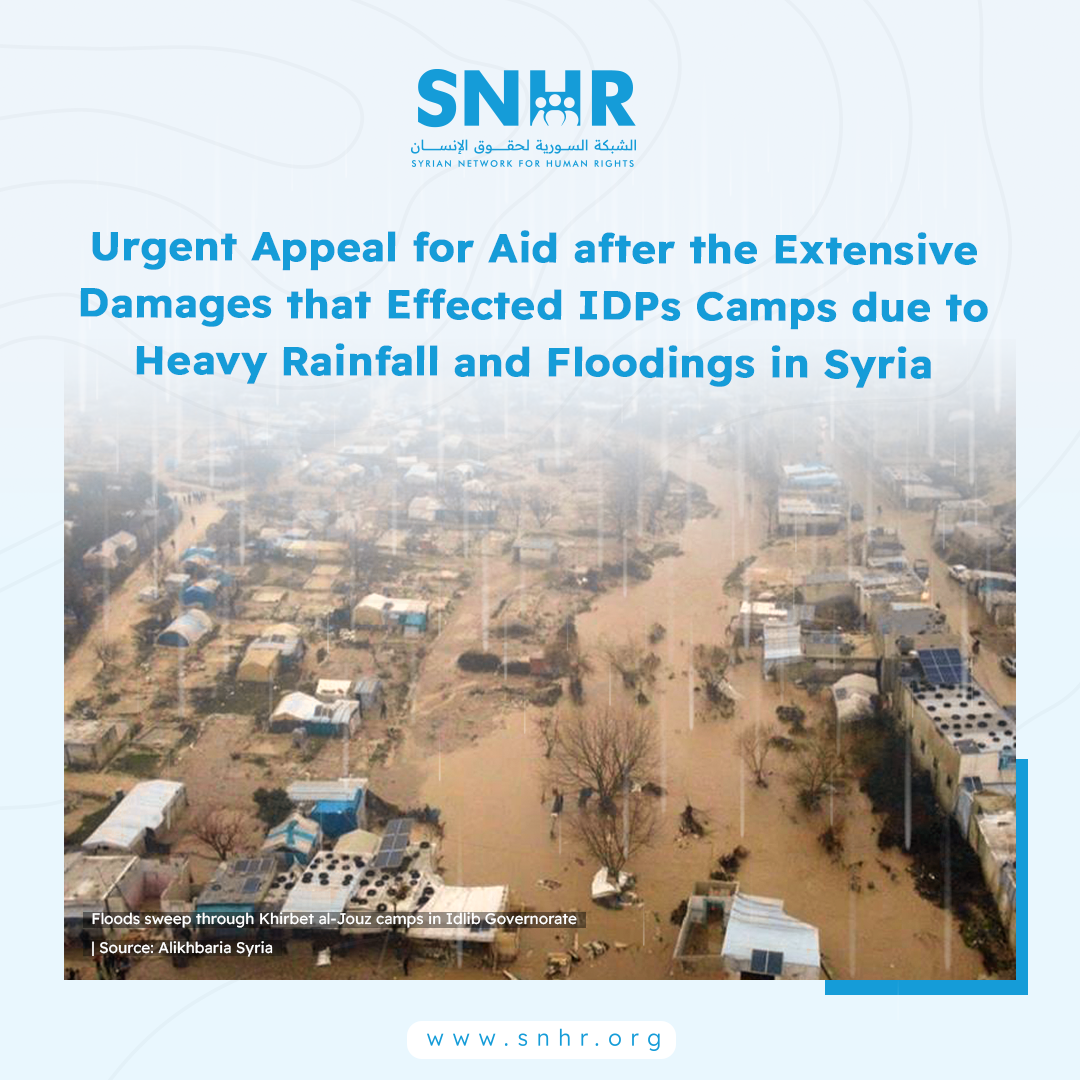
On February 7 and 8, 2026, several areas of Syria witnessed heavy rainfalls and torrential floods that led to the submergence and damage of a large number of IDPs camps, mainly in the western parts of Idlib Governorate. These camps were built on lower grounds and close to seasonal waterways, making them high-risk areas for torrential floods.
Extent of Damages and Human Loss
Preliminary information recorded by SNHR shows:
- Due to the torrential floods, hundreds of tents were submerged in water or destroyed leading to the repeated displacement of hundreds of families that were forced to evacuate their tents in an extremely cold weather and continued rainfall.
- Around 24 IDPs camps were damaged to varying degrees. The damages included soil erosion, collapse of tents, primitive drainage networks shutdown, in addition to the waste of mattresses, bedcovers, and food inside the tents.
- Around 931 families who are residents of the damaged camps have been affected, including 494 families that lost their residence and belongings.
- Torrential floods also damaged the dirt roads leading to a number of tents impeding the rescue and aid teams in the early hours of the emergency raising the difficulty of aid-response opera
- Some families sought refuge in schools and mosques as temporary shelters in the absence of safe residential substitutes.
The damages camps are part of around 1150 IDPs Camps that are still set up in Northern Syria, including 801 in Idlib suburbs and 349 camps in Aleppo suburbs. These camps shelter over a million internally displaced persons that continue to live under extremely severe humanitarian and weather conditions, with an extreme deficiency of the required infrastructure, drainage networks, and weather-related emergency response mechanisms.
This disaster comes as part of a recurring humanitarian crisis, where:
- Most IDPs camps rely on tattered tents and temporary structures that doesn’t provide enough protection against rainfall or floods.
- The incidents of erosion or submergence are repeated every winter, while permanent solutions remain missing as hundreds of thousands of civilians continue to be in unsafe locations.
- These conditions are a continued violations of the right to adequate housing and protection from dangers, especially children, women, and the elderly.
The Status of the Aid and Response Teams
The Civil Defense teams and local response teams started rescue and evacuation processes, which included:
- Extraction of families that were stuck in submerged tents.
- Draining the water and opening the damaged roads.
- Provide first-aid assistance and transporting the injured.
However, these teams are working in extremely difficult circumstances, with a severe shortage in equipment, vehicles, and fuel, which limits their ability to effectively respond to the disaster as the number of damaged camps increase in continuation of weather-induced risks.
