


Fadel Abdulghany
Fadel Abdulghany
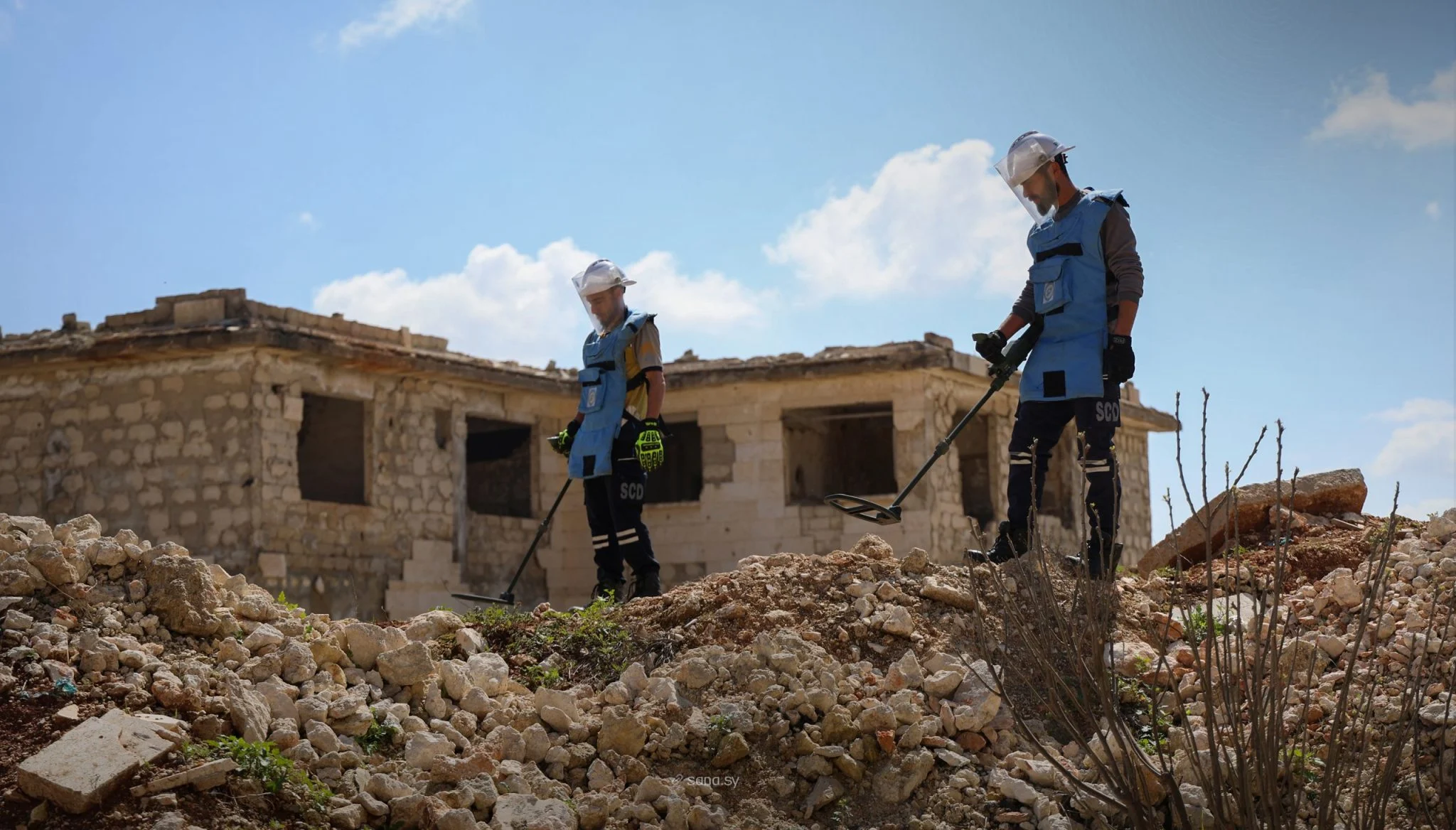
In transitional contexts, rubble is rarely a neutral material, and it isn’t to be viewed as mere physical remnants of the conflict; it is at once a humanitarian obstacle, a source of danger to public safety, a forensic record, and a potential legal evidence, for the rubble impedes access to hospitals, schools, water networks, and homes, and conceals human remains and unexploded ordnance.
And when the site includes detention facilities, burial grounds, or hidden remains, the rubble may preserve physical traces relevant to unlawful attacks on civilian objects, and it may also contribute to uncovering the facts of enforced disappearance, torture, and other grave violations. The transitional phase in post-Assad Syria inherits all of these conditions at once. Hence, any framework that deals with rubble removal as a purely logistical task, or, in return, as a purely evidentiary task, misunderstands the problem.
The temptation in heavily theorized writing is to anchor the discussion on a single rule, that of “preservation of the rubble”; however, international law doesn’t contain such a rule. The applicable framework is a composite one, and the forensic dimension is the strictest of it, as the Minnesota Protocol provides the central UN guidance for investigations into potentially unlawful deaths, including the management of the scene of the incident, recovery, documentation, and chain of custody.
Customary humanitarian law also requires from the parties the prevention of the despoliation of the dead, the recording of information prior to the disposal of the bodies for the purpose of identifying them, and the management of remains with dignity. In a context such as Syria, where mass graves, detention sites, shelled residential buildings, and collapsed civilian infrastructure overlap in space and time, these standards converge at one conclusion: the recovery of human remains isn’t an ordinary act of removal, and it shouldn’t be assigned to contractors working without specialized forensic guidance.
From this composite framework emerges the guiding principle of the evidence-aware removal, not the comprehensive preservation. This isn’t a treaty rule, but a practical standard derived from international law, the mine action standards, and the forensic practice. It is built on an assumption that the duty to investigate, the right to know the truth, and the integrity of future prosecutions all depend on operational decisions taken long before any prosecutor reaches the site.
This principle is also conditional; it recedes when the delay creates a tangible danger to life, when the explosive hazards require an immediate intervention to mitigate them, and when the right of the population to return, shelter, and basic services can’t be deferred until a forensic clearance is obtained. Therefore, the balancing between rescue, safety, and evidence isn’t a choice between competing values, but a matter of sequencing, documentation, and referral.
To make that workable, the Syrian authorities need a balancing test built on five variables: the immediate danger to life; the contamination with explosive ordnance; the presence of human remains or the likelihood of their presence; the likelihood that the site contains evidence of serious international crimes; and the availability of the forensic capacity, the explosive ordnance capacity, prosecution, or documentation within the relevant time window.
This test isn’t mechanical, for it deals with each variable as a constraint that may alter the lawfulness of the immediate removal, the threshold of documentation, and the obligation to notify the investigative authorities. It also makes capacity a variable, not a precondition, so the absence of forensic resources can’t, by itself, justify an avoidable loss or contamination of evidence whenever less intrusive measures can be relied upon.
The same framework produces a five-fold classification of the sites. The emergency removal to save lives may proceed immediately, with a rapid documentation wherever it can be conducted safely. The urgent removal for the purposes of public safety should be followed by an initial screening of the risks of explosive ordnance and a brief forensic documentation before the use of the heavy machinery, and the planned removal for the purposes of reconstruction should require a pre-removal documentation and a municipal traceability of the transferred rubble.
The sites suspected of international crimes should lead to the notification of the investigative authorities and to an enhanced documentation. As for the sites that contain human remains or are suspected of containing explosive ordnance, they should be placed under the control of forensic experts and experts in explosive ordnance, not ordinary removal contractors. This matters because the preservation of evidence must shape the removal decision itself, not be a procedure added to it after the rubble has been moved.
Civil society organizations occupy a specific yet limited position within this framework, where organized documentation can preserve information that would have otherwise been lost, and there are recognized guidelines on how to collect such materials without harming criminal accountability.
Digital information should be handled in a manner consistent with the standards of the Berkeley Protocol for the identification, collection, preservation, verification, and analysis of open source materials. However, this role can’t extend to forensic excavation, the handling of explosive ordnance, or the recovery of human remains by the untrained.
The failure to take reasonable preservation measures may weaken the subsequent proof of the status of the object, the type of the weapon, the direction of the attack, proportionality, precautions, intent, knowledge, command responsibility, and the linkage to specific perpetrators.
The point of this article isn’t that every piece of this rubble must be documented, but that reconstruction and accountability aren’t two sequential tracks: either they begin together, or one of them undermines the other.
